
Hyundai Motor India has started a scheme to give central and state government employees a special discount on purchase of its vehicles.

Supreme Court has posed a question to Mallya about the truthfulness of his disclosure of assets and transfer of $40 million to his children

'We have seen a host of businesses across sectors generate economic value and wealth for investors.'

The country's largest lender State Bank of India will get the largest sum of Rs 8,800 crore as government's capital infusion.

Its obsession for growth, chasing corporate clients and giving up its original mandate of meeting the needs of local trade and businesses. A quarter of its loan book has gone bad. That's an error of business strategy, points out Tamal Bandyopadhyay.

After a $110 billion rout in market value, embattled Adani group got some reprieve on Tuesday after shares of most of its listed firms rebounded on bourses and international rating agencies said there was no credit risk for lenders with exposure to the group. The group, which is in the midst of a political storm after US-based short-seller Hindenburg Research's adverse report dated January 24 triggered a meltdown in group stocks wiping out billions of dollars in market value, also had a mixed day with the quarterly results of four of its entities, particularly Adani Ports and Special Economic Zone reporting a 12.94 per cent decline in consolidated net profit to Rs 1,336.51 crore for the December quarter 2022. Shares of flagship firm Adani Enterprises settled nearly 15 per cent higher at Rs 1,802.50 apiece while shares of Adani Wilmar jumped 5 per cent to end at Rs 399.40 on BSE.
Banks, through the Indian Banks' Association, have urged RBI and credit information companies to maintain a database of wilful defaulters.
The changes in the domestic and global economy following the outbreak of the Covid-19 pandemic are altering the corporate profit league table in India. Reliance Industries (RIL), which topped the India Inc profit chart for more than a decade, lost out to State Bank of India (SBI) in the 2023-24 (FY24) April-June quarter (first quarter, or Q1). India's biggest lender reported a consolidated net profit (adjusted for exceptional gains and losses) of Rs 66,860 crore during the trailing 12-month (TTM) ended in June this year, ahead of RIL's TTM adjusted net profit of Rs 64,758 crore in the quarter.

The World Bank has approved loans totalling $1.75 billion (about Rs 13,834.54 crore) to fund India's PM Ayushman Bharat scheme and private investment to boost the economic growth. Of the total loan, $1 billion will go towards the health sector, while the rest $750 million will be in the form of development policy loan (DPL) to fill the financing gaps through private sector investment in the economy. The World Bank Board of Executive Directors approved two complementary loans of $500 million each to support and enhance India's health sector.
It has Rs 20,500 crore of standard stressed pool outstanding as of June 2018. Thus, the entire stressed book (net NPAs and standard stressed pool) is nearly two times its net worth.

Domestic institutional investors pumped Rs 2.3 trillion into equities during H1 CY24. Of this, mutual funds contributed 80%.

Tamil Nadu-based Lakshmi Vilas Bank (LVB) with pre-independence lineage on Friday lost its identity after its merger with the Indian subsidiary of Singapore's DBS Bank. The debt-ridden 94-year old old bank's fate was sealed with Union Cabinet headed by Prime Minister Narendra Modi approving Scheme of Amalagamation on Wednesday.

Over the short to medium term, valuations are more likely to move down than up.

'Last year, Rs 20,000 crore was ripped off from the banking system.' 'The situation has deteriorated under the Modi government.'

Although such alerts are not compulsory for the banks, this may become the norm now if payments are missed even for a day.
Rush to offload bad loans indicates a revival in asset-sale market

Unlike any other business, banking is a turf where the captain's role is the most critical. Often a bank is defined by the personality of the CEO who runs it. Both HDFC Bank and Kotak Mahindra Bank are the creation of their CEOs, notes Tamal Bandyopadhyay.

Banking operations are likely to be hit on Tuesday as unions have called a nationwide strike to protest mergers of public sector undertaking banks and the proposed hike in foreign direct investment limit to 74 per cent in the sector.

'If private capex has to kick in, there should at least be 2-3 years of visibility.'

It was a protest which held a mirror to the government of a state taking pride in its commitment to democracy, gender equality and social indices.One person, who in his employed days had known governments and political parties at close quarters, told me that public perception of how the Kerala government handled the ASHA workers' strike had been terrible, reports Shyam G Menon.

From the enactment of the capital control Act to the recognition of the BSE as a stock exchange and the infamous Harshad Mehta scam, here are the 18 biggest events for stock markets from 1947 to 1993.

Rogue lending under political influence was rife in the Congress-led regime and is not happening in the Modi regime, certainly not on that scale. But if PSBs cannot lend as indiscriminately as they did last time in the name of 'credit expansion', how well will these banks do, asks Debashis Basu.
.jpg)
These are FM radio, uplinking news & current affairs, print media (news & current affairs), commodity exchanges, stock exchanges along with depositories and clearing corporation, power exchanges, petroleum & natural gas refining, insurance, defence production and private security agencies.

Prayagraj is transforming into a massive temporary city to host the Maha Kumbh, the world's largest religious gathering, expected to draw over 40 crore pilgrims. The preparations include extensive infrastructure development, including 160,000 tents, 150,000 toilets, and a 1,250-km pipeline network. The event, starting on January 13, will culminate on February 26, bringing together millions of devotees for the holy dip at the confluence of the Ganga, Yamuna, and Saraswati rivers.

Both the Lok Sabha and Rajya Sabha were adjourned till 2 pm after opposition members held protest in Parliament seeking a discussion on the issue.
The government has invited applications for the post of deputy governor of the Reserve Bank of India (RBI) from interested candidates with at least 25 years of experience and below 60 years of age as on January 15, 2025. One of the deputy governors, Michael Patra's current term will end on 15 January. The last date of submission of applications is November 30, 2024.
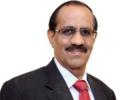
Experts interviewed CMDs of nine public sector banks on Friday and Kamath is believed to be in the reckoning
.jpg)
Prior RBI permission a hurdle, given its views; business interest needs to be clearer.

FDI rules announced last year changed the criteria of calculating these investments and included American depository receipts, global depository receipts and convertible shares also in that category.

'If individual stocks start falling 25% to 30% or more, then I doubt how many of them will be able to withstand that (kind of selloff). That is when you'll see panic coming in.'

The government is somehow convinced that selective low-rate lending will stimulate demand and accelerate economic growth that plunged to a four-year low of 4.4 per cent in the first three months of 2013-14.

Laggards yet, a number of smaller PSBs in the category have balance sheets which do not give much comfort.

Budget 2025-26 delivers a carefully calibrated strategy-stimulating demand and investment while keeping fiscal discipline intact. In an environment marked by global trade disruptions, and a softening in urban consumption, Finance Minister Nirmala Sitharaman has taken a measured approach.

Ten trade unions to go on strike to protest against changes in labour laws
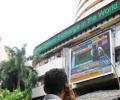
The 30-share Sensex ended higher by 46 points at 26,360 and the 50-share Nifty gained 16 points at 7,891.

Since the Budget announcement on July 5, FIIs have been busy unloading their stock.

'To the believers of crypto regulations, I have only one question to ask, how will you regulate it?'

'These are only passing clouds. The banking industry is a century-old industry and this is not the first time it is going through such a crisis.' 'When the economy revives, those companies that are in the infrastructure fields will also get revived.' 'After all, a lot of money has gone into creating assets like power projects and roads, so you can't say money has been wasted.'

Believe it or not, the regulator is even stretching its arm to identify stressed borrowers and gauge the 'distance to default' as a measure of a particular bank's fragility, reveals Tamal Bandyopadhyay.
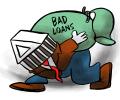
Why do we need a bad bank, owned by the banks themselves when there are at least 28 ARCs around, asks Tamal Bandyopadhyay.
